
How Automation is Transforming Investment Research: What Analysts Need to Know
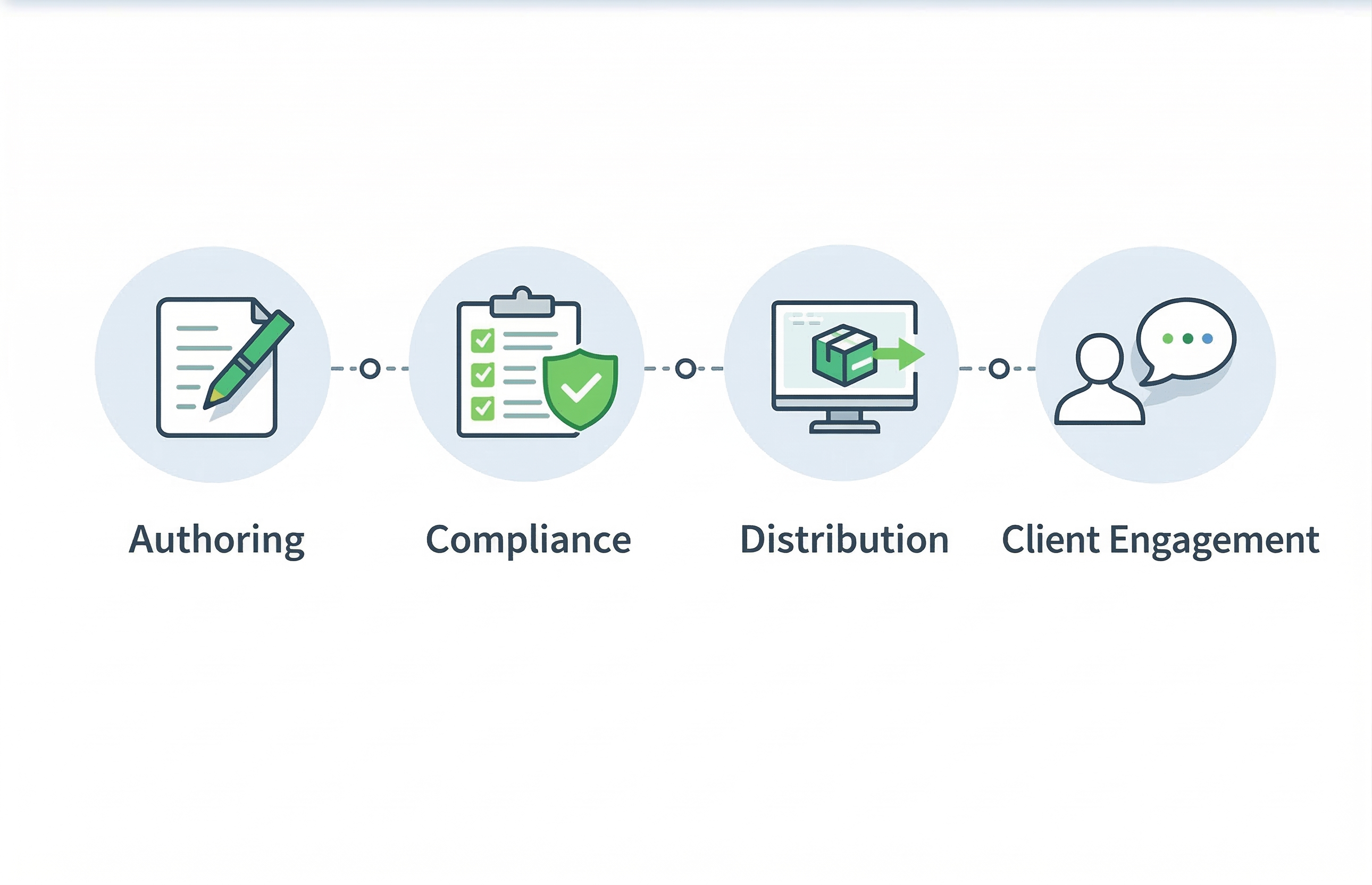
Automation is reshaping investment research by streamlining authoring, compliance, distribution, and client engagement. Intelligent, workflow-driven systems significantly enhance productivity, reduce compliance risks, and offer a competitive edge. The shift from manual processes to automated systems allows analysts to generate insights faster, engage clients more effectively, and mitigate regulatory risks all while maintaining the quality of research. By reducing the mechanical burden, automation empowers analysts to focus on generating alpha and driving business outcomes. In a fast-paced market, where speed and credibility drive wallet share, automation becomes not just a tool, but a strategic necessity.
The Traditional Research Model: Where It Breaks
Before diving into the impact of automation, let’s first examine the challenges faced by the traditional investment research model. These challenges undermine speed, reduce operational efficiency, and increase risk in critical areas.
Key Challenges:
- Manual Report Creation: Analysts still spend excessive time on repetitive formatting, making it hard to scale high-quality output.
- Version-Control Chaos: Between drafts and final reports, discrepancies in data often result in errors and missed opportunities.
- Compliance Bottlenecks: Regulatory complexity particularly around disclaimers slows down the time to publish critical research.
- Fragmented Data Sources: Analysts pull data from multiple, disjointed spreadsheets and feeds, increasing the risk of errors and delays.
- Slow Time-to-Market: Due to manual processes, valuable investment ideas often arrive late, missing key market movements.
- Limited Insight into Engagement: Without tracking tools, it’s difficult to gauge readership or client engagement with research.
In a market where speed and credibility drive wallet share, these inefficiencies are no longer sustainable.
Automation in Research Authoring: From Hours to Minutes
Smart Templates & Data Integration
Automation allows analysts to produce research reports faster and with greater accuracy. Using intelligent templates and data integration, the time to create a research note is drastically reduced.
- Macro-free intelligent Word templates: Automated templates eliminate repetitive work, enhancing report consistency.
- Auto-populated financial data: Integration with centralized financial repositories ensures accurate, up-to-date market and financial data.
- Instant report generation: Analysts can generate a detailed 5-page note in just seconds, cutting hours of mechanical work.
What Analysts Need to Know:
Automation removes the mechanical burden of report creation, allowing analysts to focus on high-value tasks such as market analysis, opportunity identification, and client interaction. This is not about reducing critical thinking it’s about freeing up time for alpha generation.
Workflow Discipline & Compliance Automation
Intelligent Approval Chains
- Structured approval workflows: Automated systems ensure that reports follow defined approval paths with clear time stamps and audit trails.
- Complete workflow transparency: Real-time tracking of approval stages ensures that compliance and accuracy are maintained.
Smart Disclaimers & Conflict Management
- Dynamic disclosures: Automation adjusts disclaimers based on issuer and analyst logic, ensuring accurate legal coverage.
- Conflict management: Automatic conflict checks with black/grey list controls to minimize regulatory risk.
What Analysts Need to Know:
Automation strengthens compliance by removing the need for manual checks and balances. It ensures that analysts remain within regulatory guidelines, protecting their careers while speeding up the publication process.
AI and the Rise of the “Augmented Analyst”
Agentic AI as a Force Multiplier
- 3x potential coverage expansion: AI tools enable analysts to cover more stocks, sectors, or asset classes without compromising on research quality.
- 50% faster analysis cycles: Automation accelerates data processing, cutting the time needed for research cycles by half.
- Reduced time-to-market: AI ensures that insights are delivered in real-time, enabling faster responses to market movements.
Shifting Analyst Roles
- Less time spent on data management: AI reduces the need for spreadsheet maintenance, allowing analysts to focus on strategic analysis.
- More focus on thematic thinking: Analysts can spend more time thinking about trends and market dynamics rather than dealing with data.
- Increased client engagement: Analysts can dedicate more time to interacting with clients, improving relationships, and delivering personalized insights.
What Analysts Need to Know:
AI complements the role of analysts, expanding their reach, accelerating their work, and enhancing their ability to engage clients. AI is a force multiplier, increasing the scope of research while maintaining a sharp focus on high-value analysis.
Automated Distribution & Digital Engagement
Intelligent Content Delivery
Automation streamlines the distribution of research to clients, ensuring it reaches the right people at the right time.
- Preference-based research distribution: Research is sent according to client preferences (PDF, HTML, or portal).
- Integration with RIXML aggregators: Research can be seamlessly distributed to third-party aggregators, expanding its reach.
White-Labeled Research Portals
- Branded content: Research is converted into HTML for easy integration into custom, branded portals.
- Personalized user experiences: Clients enjoy a tailored experience that increases engagement and content consumption.
- Engagement tracking: Built-in analytics help firms measure how clients interact with content, providing valuable insights for future research and distribution.
What Analysts Need to Know:
Research is no longer simply published it’s curated, tracked, and optimized for maximum engagement. Automation ensures content is delivered to the right clients, at the right time, and in the right format, enhancing client satisfaction and loyalty.
Data Security & Digital Rights Management
As research is digitized, protecting intellectual property becomes a critical concern.
- Watermark tracking: Research documents are watermarked, enabling firms to trace the origin and usage of their content.
- OTP and IP-based access control: Access to sensitive research is protected through one-time passwords and IP tracking.
- Digital rights management: Features like document editing restrictions and download limits ensure research remains secure.
Highlight:
Digital rights management (DRM) ensures that research is not only compliant but also protected against unauthorized use, safeguarding intellectual property throughout the distribution process.
Business Impact: Beyond Productivity
Connecting Automation to Firm-Level Outcomes
Automation does more than increase productivity; it delivers measurable business impact.
- Higher research output per analyst
- Faster responses to market events
- Improved confidence in compliance
- Stronger client engagement and satisfaction
- Better cross-sell opportunities via CRM integration
What Analysts Need to Know:
Automation directly impacts a firm’s bottom line, driving revenue growth by improving speed, efficiency, and client satisfaction. It’s a strategic investment that enhances the firm’s ability to compete in a fast-moving market.
Implementation Considerations: What Firms Must Get Right
For successful automation adoption, firms must focus on several key implementation aspects:
- Centralized financial repository: Ensuring data consistency across research and business functions.
- Clear workflow design: Preventing inefficiencies by defining clear processes.
- CRM and distribution integration: Streamlining research creation, distribution, and client engagement through seamless system integration.
- Training analysts to think "automation-first": Maximizing the benefits of automation through proper training and adoption.
Change Management:
Analysts don’t resist automation; they resist bad tools. Proper implementation of intuitive, user-friendly platforms is essential for smooth adoption.
The Future of Investment Research
The future of research is a hybrid model, blending human expertise with AI-powered insights. Real-time updates, predictive compliance checks, and engagement-driven content will redefine the research process. The future isn’t about writing more; it’s about writing smarter, publishing faster, and engaging more deeply.
Closing Thought:
“The competitive advantage in research will not come from writing more but from writing smarter, publishing faster, and engaging deeper.”
FAQs
1. How does automation improve the research authoring process?
Automation speeds up research authoring by using smart templates and data integration, eliminating repetitive tasks and auto-populating financial data. This allows analysts to produce high-quality research quickly while focusing on strategic analysis and client engagement.
2. What role does AI play in transforming investment research?
AI expands an analyst's coverage, speeds up data processing by 50%, and enables faster responses to market events. It frees up time for strategic thinking and client engagement, enhancing research quality and efficiency.
3. How does automation assist with compliance and regulatory issues?
Automation ensures compliance by using approval chains, dynamic disclaimers, and conflict management tools. It speeds up the process, reduces errors, and ensures reports meet regulatory standards.
4. How does automation impact client engagement and distribution?
Automation tailors research distribution to client preferences and integrates with third-party aggregators. It also provides personalized research portals and tracks client engagement to improve future content delivery.
5. What are the business benefits of automating investment research?
Automation improves research output, reduces time-to-market, and boosts compliance. It enhances client engagement, opens cross-sell opportunities, and drives revenue growth by increasing efficiency and client satisfaction.