
How “Pick of the Day” Formats Improve Research Discoverability and Client Relevance
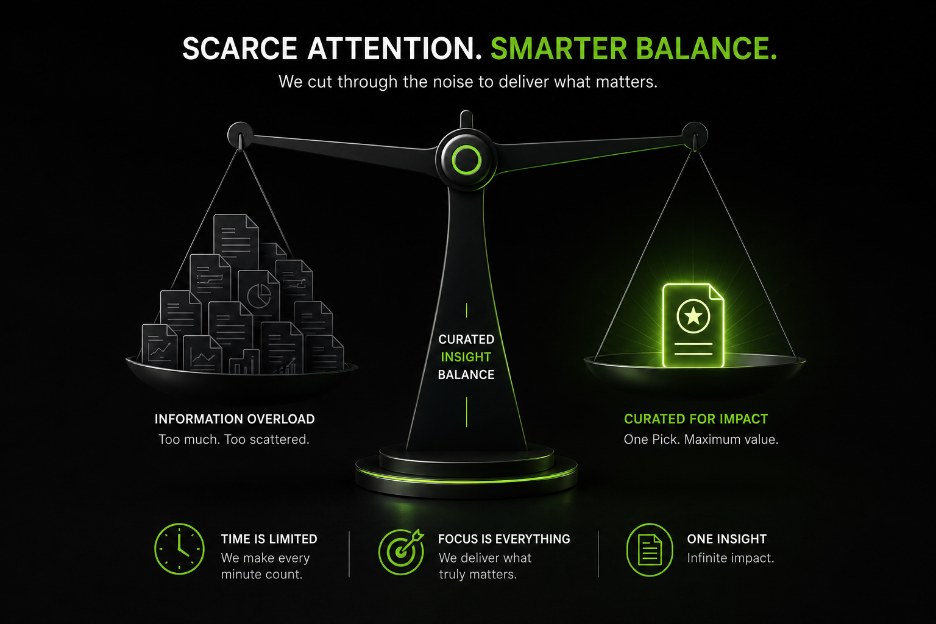
Equity research has an attention problem.
Research houses publish earnings updates, company notes, sector views, valuation changes and market commentary into an environment where institutional clients are already filtering emails, research portals, aggregator feeds, market data and direct sales contact. The volume can be substantial even when the underlying research is highly relevant.
The challenge is therefore broader than producing quality research. It is helping the right client discover the right insight while it still matters.
That is where a “Pick of the Day” format becomes useful. Properly executed, it gives research organizations a way to surface one timely, high-value insight from the wider research library, explain its relevance and create a direct route into the underlying research note.
Research Discoverability Is Now a Commercial Problem, Not a Workflow Problem
Research production has a visible endpoint: the note is approved, published and distributed.
Research value does not.
Once a note leaves the publication workflow, it competes for attention. A differentiated analyst view can disappear beneath newer material without ever becoming part of a client conversation. That creates a gap between producing research and getting economic value from it.
Every research note carries a real cost to produce — analyst time, market data, editing, compliance review and distribution overhead. A note that goes unread turns that cost-to-publish into pure write-off. Discoverability is where research production becomes research P&L.
This is why research consumption matters as much as research output. The issue is not whether every note should attract the same level of readership. It is whether the research house can identify which insights deserve priority and place them in front of the clients most likely to care.
For Heads of Research and equity sales leaders, that is an operating question as much as an editorial one.
“Pick of the Day” Works as an Editorial Layer, Not Another Recommendation
A useful “Pick of the Day” is broader than a daily stock call.
It could surface a high-conviction idea, an earnings-related change, a sector development, a material revision to an investment thesis or an analyst view that has become more relevant because of a market event.
Its purpose is selection.
Clients should be able to understand three things quickly: what matters, why it matters now and whether the underlying research is worth opening.
That gives the research house a concise entry point into deeper work without forcing every client to scan a large catalogue of newly published content. The detailed research note still carries the financial analysis, assumptions, valuation framework and compliance disclosures. “Pick of the Day” improves the route into that work.
If everything becomes a “pick,” nothing is genuinely prioritized.
That is the discipline behind the format. The selection needs to reflect materiality, timing and client relevance rather than publication chronology.
Curation Only Pays Off When It’s Connected to Client Context
The same equity research insight does not carry equal relevance for every client.
A long-only fund manager, hedge fund, sector specialist and corporate client may all read the same note for different reasons. Even within one institution, individual recipients may care about different issuers, sectors, countries, analysts or research products.
That changes what effective curation looks like.
A “Pick of the Day” becomes more useful when the selected insight is connected to the interests of the recipient rather than pushed indiscriminately across the client base. For equity sales, that creates a sharper starting point for engagement. Instead of forwarding another research note, the salesperson has a reason to contact a client now.
For analysts, it gives important work a better chance of reaching relevant readers. For buy-side clients, it reduces the effort required to decide what deserves attention. For the research house, it creates a stronger connection between research production, distribution and measurable client engagement.
The point is not to make research shorter. It is to make attention allocation better.
Where ANALEC Resonate Makes “Pick of the Day” Operational
The editorial decision is only one part of the process. The harder question is how to make that decision repeatable across distribution, client preferences and readership tracking.
ANALEC Resonate distributes research against individual client preferences — including research product, issuer, sector, country, market cap and analyst — and supports delivery in formats such as PDF and HTML. It also supports research distribution to third-party aggregators using RIXML.
That matters because a curated insight has greater value when the surrounding distribution process understands who should receive it and how they prefer to consume research.
Resonate also tracks research engagement and readership behaviour, including client consumption across distributed research. Its research platform combines content distribution with readership analytics, allowing research organizations to connect published content with evidence of how clients are engaging with it.
That creates a practical feedback loop.
A research organization can curate what deserves attention, distribute it against client preferences, observe engagement and use that information to make future research communication more relevant. “Pick of the Day” becomes part of a managed research-distribution process rather than a one-off marketing email.
The operational advantage is visibility: research teams can move beyond asking what they published and begin asking what clients actually consumed.
The Future of Research Distribution Is Curated, Contextual and Measured
Research houses are unlikely to solve information overload by publishing less across the board. Clients still expect breadth, speed and depth.
The bigger opportunity is to create better hierarchy around that output.
Research distribution is moving toward a model where content is increasingly curated, matched to client context and assessed through engagement data. Detailed research remains central, but the path into that research becomes more deliberate.
That has consequences for how research organizations think about productivity. The return on analyst effort is shaped not only by the quality of the insight, but also by whether the firm can surface it, target it and learn from how clients respond.
“Pick of the Day” is a simple expression of that principle. It applies editorial judgment to a high-volume research environment and gives clients a clearer reason to engage.
The future of equity research is not about producing more insights for the sake of volume. It is about ensuring high-value insights are easier to discover, reach the right clients and contribute more directly to research engagement.
ANALEC Resonate provides the distribution, preference-management and readership infrastructure that makes that approach operational at scale.
FAQs
1. What is a “Pick of the Day” in equity research?
A “Pick of the Day” is a curated research-discovery format that highlights a timely, high-value insight from a research house’s broader content library. It could feature a high-conviction idea, earnings update, sector development, thesis change or analyst view. Its purpose is to help clients quickly understand what deserves attention and why.
2. How does “Pick of the Day” improve research discoverability?
It creates a clear entry point into a larger body of equity research. Instead of expecting clients to scan multiple research notes, emails or portal updates, the format surfaces a selected insight and directs interested readers toward the underlying research. This helps valuable analysis compete more effectively for limited client attention.
3. Does “Pick of the Day” replace full equity research notes?
No. Detailed research notes remain essential for financial analysis, valuation assumptions, investment thesis changes and required disclosures. “Pick of the Day” sits above that content as an editorial layer, making selected research easier to find and giving clients a reason to explore the deeper analysis.
4. Why is client context important when curating research insights?
Institutional clients have different investment priorities, coverage interests and research preferences. An insight that matters to a sector-focused hedge fund may be less relevant to another client. Connecting curated research with preferences such as issuer, sector, country, analyst or research product helps research houses make distribution more relevant rather than simply increasing message volume.
5. How does ANALEC Resonate support a “Pick of the Day” research strategy?
ANALEC Resonate provides the research distribution, preference-management and readership infrastructure around the editorial process. Research can be distributed according to individual client preferences, delivered through formats such as PDF and HTML, contributed to third-party aggregators using RIXML, and tracked through readership analytics. This allows research organizations to connect curation with targeted distribution and measurable client engagement.