

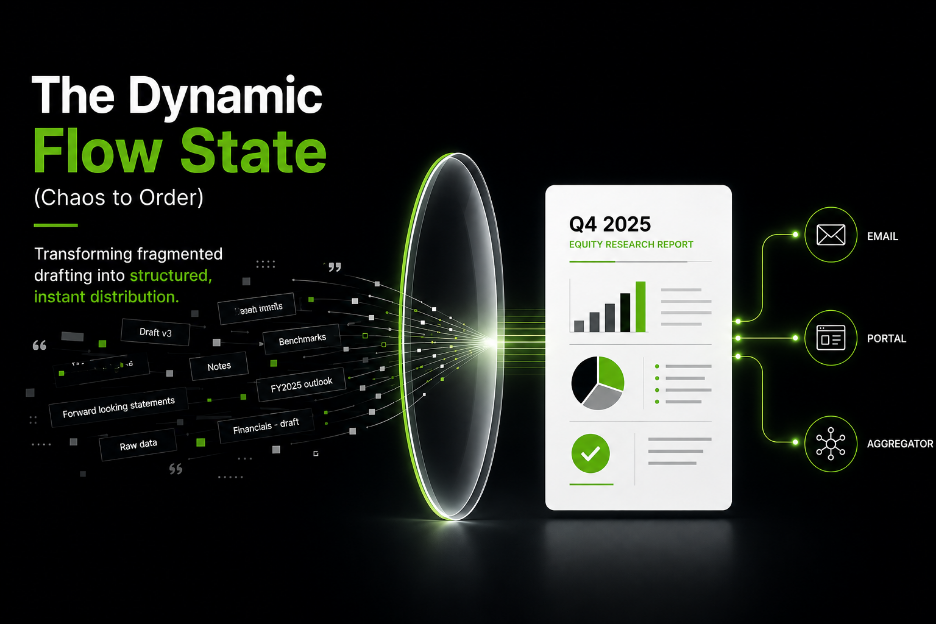

01. Fundamental investment research is positioned for dramatic change
The practice of producing investment research on listed stocks has evaded real change over the last 30-40 years. I am an ex-II-ranked analyst who grew up in the world of global investment research in the mid-1990s. In my time, an average sell-side analyst (at a global investment bank) could cover no more than 12-15 stocks at a time. This has been a major business model constraint for decades, further compounded by continuously declining payouts from the client base for written content.
I believe Gen AI, and its various configurations, could potentially disrupt existing practices to boost productivity, analytical insights, and rating conviction across analysts. I make this statement after having done in-depth work on AI and how best it can be leveraged, intelligently and securely, while keeping the “Analyst” as the valuable differentiator.
02. Drafting versus finalisation: Understanding the Difference
Bottom-up fundamental research is a craft of synthesis: regulatory filings (10-Ks, 10-Qs, other releases); channel checks; reference to a line in the last quarterly release notes/call; a financial model that reflects these findings. You reflect on reported financials, your expectations from past publications, valuation and stock performance data, and external factors that impact your existing outlook. All of the above and more, intertwined into an analytical web to produce your final insight and recommendations.
Simply put – leveraging an LLM to give you an earnings preview note or earnings commentary note will produce vastly different results for two different people conducting the research via different prompts or accessing different models. Now add your own proprietary data set and analytical insights to this mix, and you have a whole new set of dimensions to this complexity.
Welcome to the world of Agentic RAG engineering and its impact on your world! Using RAG in your analytical framework allows you to leverage LLMs while controlling hallucinations and biases with a human-in-the-loop construct. The latter ensures your organisation remains firmly in intellectual control of your offering.
03. The Orchestration Layer is Vital
Here you are! You now have a library of agents that work together in a defined manner to aid your research process, ensuring your differentiation and ability to protect your unique insights.
What is vital is the orchestration layer. It is a choice to ensure your unique differentiation and analytical throughput. For example, you can leverage LangGraph to create your orchestration layer. The orchestration layer picks the relevant agent(s), the source of the information, your RAG dataset, your model or financial repository, your designated LLMs, news feeds, and other primary sources.
04. RAG is only as good as what it will read