
How Can Research Analytics Help Equity Sales Teams Prioritize Client Conversations?
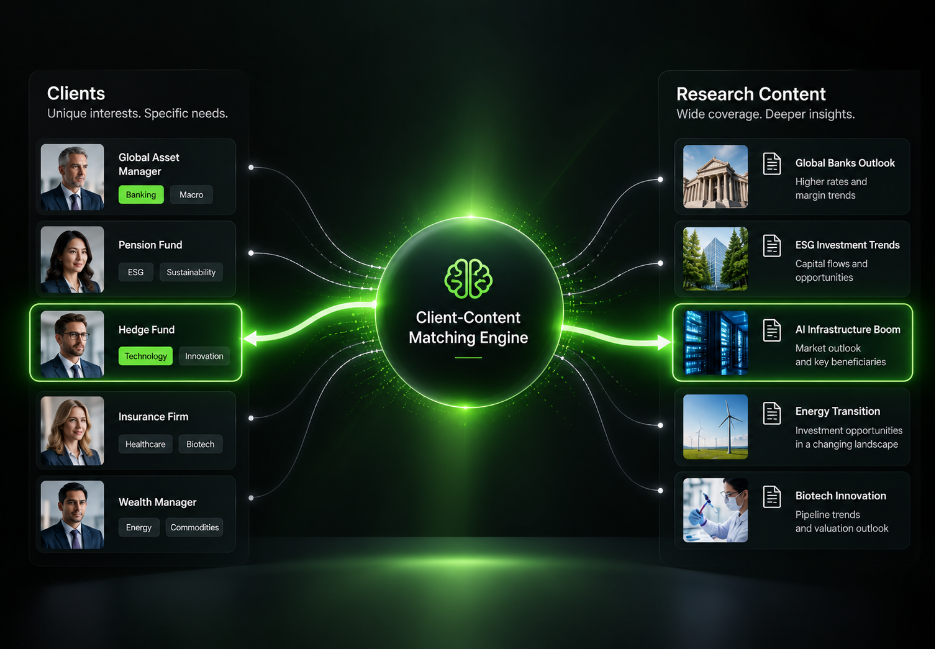
Equity sales teams rarely struggle with a lack of information. They have research reports, analyst recommendations, earnings updates, market developments, and client activity to consider every day. The real challenge is deciding which insight matters to which client, and when it is worth starting a conversation.
Sending more research does not necessarily create better engagement. A report may be highly relevant to one portfolio manager but have little immediate value to another.
This is where research analytics for sales teams becomes useful. By understanding how clients engage with investment research, sales professionals can identify interests, prioritize outreach, and make conversations more relevant.
Why Do Equity Sales Teams Need Research Analytics?
Research houses produce valuable insights across companies, sectors, and financial markets. Yet publishing research and getting clients to engage with it are two different challenges.
Traditional research distribution often focuses on sending reports to broad client lists. Sales professionals may then rely on personal relationships, email responses, and manual follow-ups to judge client interest.
This creates several problems:
- Limited visibility: Teams may not know which clients are reading specific reports.
- Missed opportunities: Relevant research insights may not reach the right client at the right time.
- Generic outreach: Clients receive information that does not always match their investment interests.
- Fragmented intelligence: Research consumption data and client feedback may sit in separate systems.
For equity sales and trading teams, these gaps make client prioritization harder. Research analytics helps bring greater visibility to how published research connects with client interests.
How Can Research Analytics Help Sales Teams Prioritize Clients?
Equity research analytics helps sales teams move beyond simply tracking which reports were distributed. It provides information about research consumption and engagement that can guide their next conversation.
Consider two institutional investors receiving the same banking-sector report. One regularly engages with banking research, while the other primarily follows technology companies.
Their research consumption histories provide different starting points for conversation. The first may warrant a timely follow-up on the banking report. The second may be better served with research aligned to their established interests.
The objective is not to contact every client who reads a report. It is to identify where research engagement creates a meaningful reason to engage.
Which Research Signals Can Help Identify Valuable Client Conversations?
Not every research interaction indicates an immediate investment opportunity. However, several signals can help sales professionals understand what deserves attention.
- Research readership: Which clients are accessing particular reports, sectors, or companies?
- Engagement patterns: Are clients returning to certain research topics over time?
- Emerging themes: Which investment themes are attracting greater research consumption?
- Market developments: Have earnings announcements, regulatory changes, or sector events made previously published research more relevant?
- Client preferences: Do observed research interests align with the client's stated investment priorities?
- Analyst activity: Is new research available that addresses a client's earlier questions?
These signals become more useful when considered together.
For example, increased readership of energy-sector research following a major oil-price movement may suggest a timely discussion. But readership alone does not reveal whether a client intends to trade, change portfolio exposure, or simply understand the market.
Sales professionals still need to interpret that activity against client relationships, investment mandates, and market context.
How Can Sales Teams Turn Research Insights Into Better Client Conversations?
Research analytics can change both the timing and substance of client outreach.
Generic approach:
"Here is our latest research report on the banking sector."
Insight-led approach:
"Our latest banking-sector research examines how changing interest-rate expectations could affect earnings. Given your previous interest in the sector, would a discussion with our analyst be useful?"
The second conversation offers a clearer reason to engage.
For buy-side clients, this means receiving research ideas that better reflect their investment focus. For corporate clients and issuers, relevant research engagement trends can also help inform discussions about sector developments and investor attention, subject to appropriate confidentiality controls.
For research analysts, feedback on readership can provide another perspective on which topics resonate with the audience.
Importantly, analytics should support professional judgment rather than dictate investment decisions or client recommendations.
How Can Analec Resonate Support Research-Led Client Engagement?
Analec Resonate helps research houses connect research distribution with readership intelligence, giving teams greater visibility into how clients consume their published research.
Its relevant capabilities include:
- Tracking readership and research engagement across supported distribution channels.
- Understanding research consumption at individual recipient and institutional levels.
- Managing client research preferences across companies, sectors, analysts, and research products.
- Analyzing engagement patterns, including how recipients access research.
- Supporting the exchange of client preferences and engagement information with CRM systems.
These capabilities help connect the research publishing process with the information equity sales professionals need to plan targeted conversations.
The value depends on how teams use the information. Consistent client records, accurate research preferences, and coordination between research and sales remain essential.
What Makes Research Analytics Valuable for Long-Term Client Relationships?
The value of equity research is not measured only by how much content a firm publishes. It also depends on whether that research reaches the right audience and contributes to meaningful client engagement.
For equity sales teams, the competitive advantage is knowing which research matters, to whom, and when it should become a conversation.
With readership intelligence and targeted distribution capabilities, Analec Resonate helps research houses turn research consumption into a more informed approach to client engagement.
FAQs
1. How can research analytics help equity sales teams prioritize client conversations?
Research analytics helps equity sales teams understand which clients are engaging with specific research reports, companies, and sectors. By analyzing research consumption patterns and client interests, sales professionals can identify relevant follow-up opportunities, prioritize outreach, and initiate more meaningful conversations instead of relying on generic research distribution.
2. What research analytics signals are most useful for identifying client interests?
Useful signals include research readership, report access patterns, frequently viewed sectors, company-specific research engagement, and changing research preferences. When combined with market developments and existing client knowledge, these signals can help sales teams understand which research topics may be relevant to individual investors and identify opportunities for timely engagement.
3. How does research analytics improve personalized client engagement?
Research analytics enables sales professionals to align their conversations with a client's demonstrated research interests and investment priorities. Rather than sending the same reports to every client, teams can focus on relevant research insights, sector developments, and analyst perspectives. This makes outreach more targeted, informative, and valuable to buy-side clients.
4. Can research analytics help research houses measure the effectiveness of their investment research?
Yes. Research analytics provides visibility into how clients consume published investment research, including which reports attract readership and how engagement varies across clients and research topics. These insights help research houses evaluate content relevance, understand audience interests, and make more informed decisions about research distribution and client engagement strategies.
5. How does Analec Resonate help sales teams turn research analytics into actionable insights?
Analec Resonate provides research readership analytics, engagement tracking, and client research preference management capabilities. It helps research houses and equity sales professionals understand how clients interact with published research across supported distribution channels. By making research consumption patterns more visible, Resonate supports better client prioritization, targeted research distribution, and more informed, insight-led client conversations.